3 November 2013 · Orna Ross
WB Yeats, Maud Gonne, Iseult Gonne... and me.
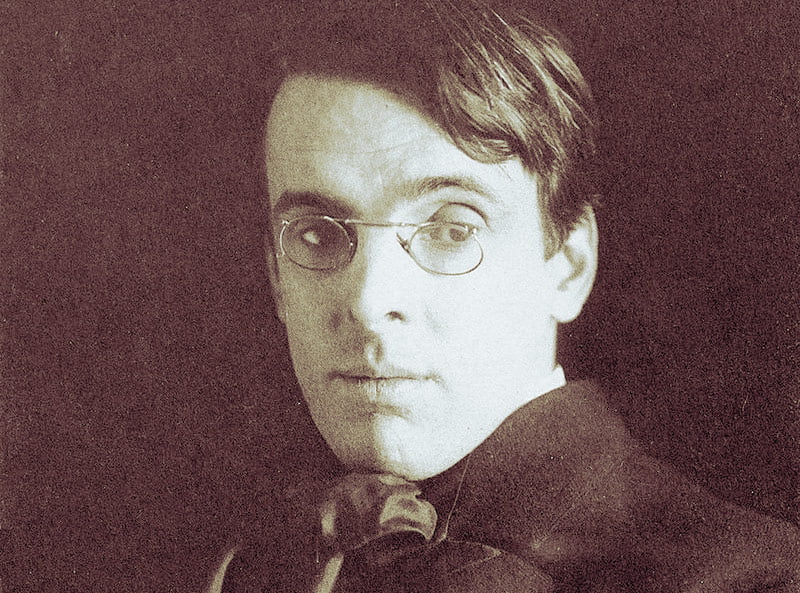 When I was a schoolgirl, I was introduced as all Irish schoolchildren are, to the national poet through ‘He Wishes For The Cloths Of Heaven,’ in which the Yeats portrays himself as a sort of cosmic Sir Walter Raleigh, laying down the light of the heavens under the feet of his beloved, Maud Gonne.
Our teacher, Miss McNamara, read the poem in a slow, mannered style she called Yeatsian, which set laughter simmering in the classroom but I, a very moony teenager nursing a broken heart, was not laughing. I soaked up every word Miss McNamara had to say not just with the poetry, but about Gonne’s beauty and the poet’s unrequited love for her. I found a book of selected poems in the school library and for months I wafted around in a befuddle of glimmering girls with pearl-pale hands and apple blossom hair that wound around stars growing out of the air.
One of the girls brought in a picture of Maud Gonne that her mother had at home, a picture taken around the time Yeats had written of her: “I never thought to see in a living woman such great beauty.” It was a beauty lost on the girls of Loreto convent Wexford in 1973, when the statuesque ideal of the Edwardians had been replaced by the androgynous, fragility of fashion models like Twiggy. My classmates picked Gonne’s image apart: her face was too broad, her chin too strong, her jaw too set, her forehead too high…
‘Maybe she didn’t photograph well,’ I suggested. ‘Maybe you had to be in her presence to get a sense of her.’
Like Yeats, I wanted the woman who inspired his words to be perfect.
So imagine my chagrin when, a couple days into our work on Yeats, Miss McNamara casually mentioned that in his later years, the poet had moved his romantic feelings from Maud to her daughter. “Her daughter?” I cried out into the classroom. “No, he couldn’t have.” Whereupon everybody laughed, out loud this time.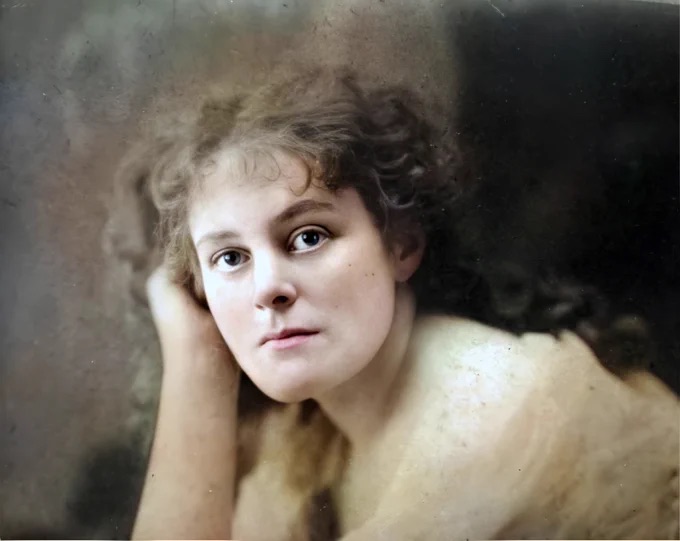 And so I was launched upon my lifetime interest in Yeats and the Gonnes, Maud and Iseult. And on my own future as a writer of poems and stories.
The interest followed me into senior school, where we were introduced to the later works like "Among Schoolchildren" and "Sailing To Byzantium", then into university, and then off syllabus, reading books I barely understood other topics I was too young to appreciate: the visions, the occult lore, the interest in Western magic and Celtic spirituality.
It was in a book of essays called Yeats And Women, that I first saw beyond the myths Yeats had created and found my way into the story of what had really happened between him and Maud and Iseult Gonne -- and began to research their lives in earnest for a book of my own.
And so I was launched upon my lifetime interest in Yeats and the Gonnes, Maud and Iseult. And on my own future as a writer of poems and stories.
The interest followed me into senior school, where we were introduced to the later works like "Among Schoolchildren" and "Sailing To Byzantium", then into university, and then off syllabus, reading books I barely understood other topics I was too young to appreciate: the visions, the occult lore, the interest in Western magic and Celtic spirituality.
It was in a book of essays called Yeats And Women, that I first saw beyond the myths Yeats had created and found my way into the story of what had really happened between him and Maud and Iseult Gonne -- and began to research their lives in earnest for a book of my own.
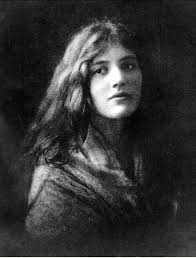 Iseult Gonne c. 1918